
3D PRINT AND SCAN
EPAK has accumulated thousands of hours of printing experience through the use of 3D printed parts in the series production of satellite antennas. You can now easily benefit from this expertise for your 3D model.
We offer a comprehensive service that ranges from individual consultation (analysis, materials, printing processes, verification of tolerance compliance) to the implementation of your 3D model.

3D-Scanning
Would you like to digitize and/or reproduce an object?
With our scanning service, you can do so with ease. We scan complex external and internal geometries of your object with an accuracy of ±0.01 millimeters.
The data will be provided to you as an STL or STEP file, suitable for further development, re-engineering, or as an interactive 3D model for presentation on your website.
3D-Druck
EPAK offers high-quality 3D printing services using the FDM (Fused Deposition Modeling) method.
Through innovative technologies and our solid expertise we are able to give shape to your ideas and transforming them into amazing 3D models.

Laserbeschriftung
EPAK offers top-quality laser engraving services to precisely and permanently mark your products or materials.
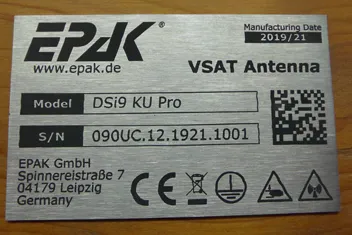
Using state-of-the-art laser technology, we can customize a wide range of surfaces, particularly stainless steel, with logos, serial numbers, barcodes, or other specific markings to meet your requirements for traceability, identification, and product branding.
3D-Scanning
3D scanning of an object is used to create a three-dimensional digital representation of the object by employing technologies such as photogrammetry, laser scanning, or structured light scanning. 3D scanning enables the creation of highly accurate digital models and is used in a wide range of applications.
Example application of the 3D scan

Reverse Engineering
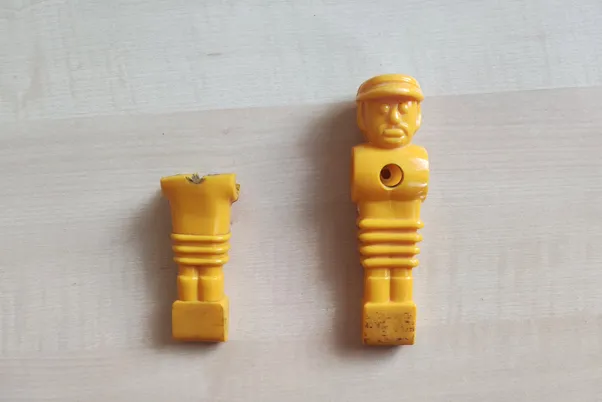
3D scanning provides precise information about the geometry of an existing object, enabling you to digitally analyze, reproduce, or modify it.
Rapid Prototyping
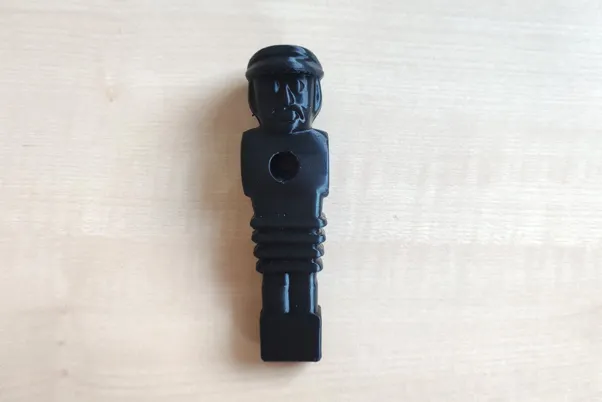
Once you have a digital 3D model of an object, you can use it for rapid prototyping. This allows you to create physical prototypes of the object using technologies such as 3D printing.
Visualisation
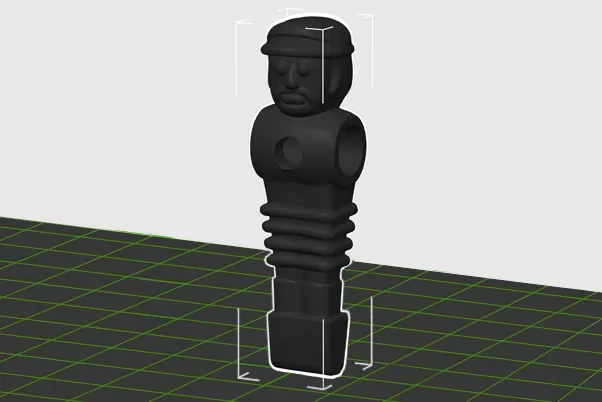
3D scanning enables the creation of realistic representations of objects for visualization and presentation purposes.
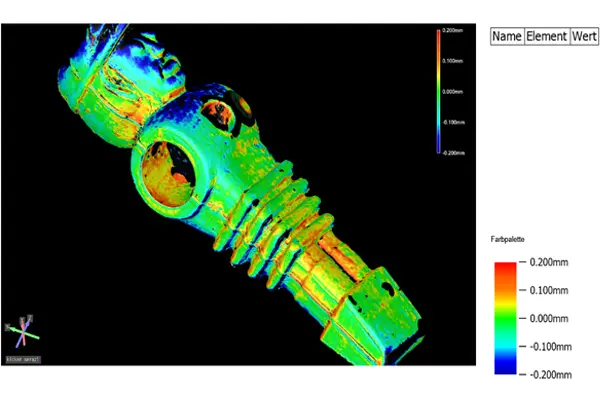
Quality Control
With 3D scanning, you can measure and inspect components for accuracy and precision.
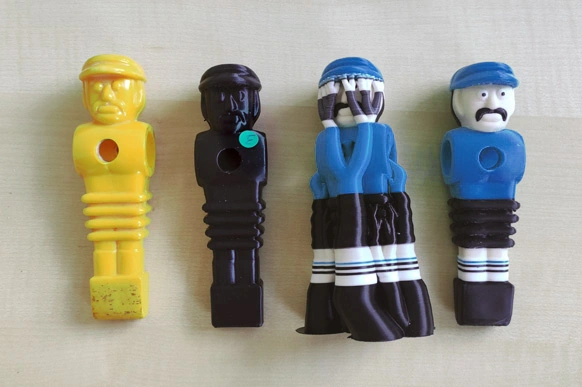
3D-Print
EPAKoffers high-quality 3D-Printing service using the FDM method. Through innovative Technology and expertise we turn your ideas into impressive three-dimensional models. Find out more about our services and how we can help you realise your projects. FDM is the acronym of “Fused Deposition Modeling”. This is a layer-by-layer construction of three-dimensional objects by melting and extruding thermoplastic material.
FDM Procedure

- A wide range of materials available: There is a wide range of thermoplastic materials available, including PLA, ABS, PETG and many more.
- Cost Efficiency: FDM is more cost-effective compared to some other 3D printing technologies, making it a popular choice for prototyping and producing functional parts.
- Suitable for Prototypes:Due to its relatively fast printing speed, FDM is well suited for rapid prototyping and testing design concepts.
Send us your project files (.STL, .STEP, .OBI, and other formats) and receive feedback or a quotation within 1–2 business days. If you do not yet have a model, you can also upload photos and documents to describe your project. We will be happy to help you turn your ideas into reality.
3D printer for professional applications
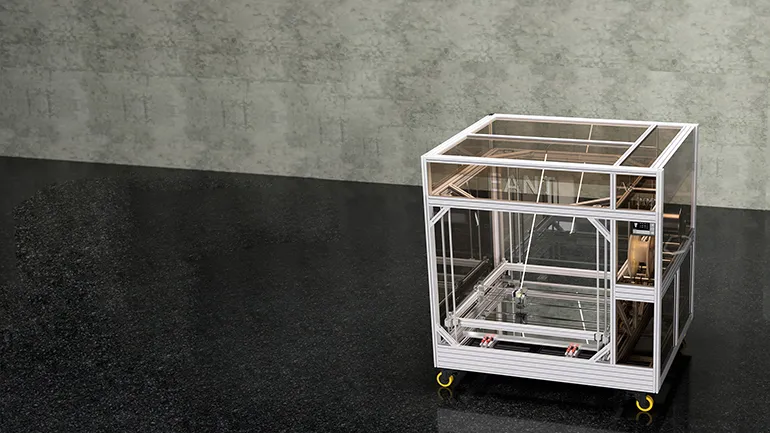
Do you require large-format 3D-printed parts? EANT will soon be offering its own industrial 3D printer, specifically developed for professional applications and large components.

AS-1000 Key data (preliminary)
Printer size: Width: 1810mm, Depth: 1500mm, Heigth: 1880mm
• Print objects XYZ: 1090mm, 1090mm, 1010mm
• Process: FDM
• Materials: alle Standard materials (PLA, PETG, TPU, ABS, ASA, PVA, PET, PA)
• Filament spools up to 10kg
• Multicolour printing
• Automatically switchable nozzles for maximum detail accuracy or fast printing
• Selective heating beds, can be switched on individually (energy-efficient)
Custom-made solutions are also possible. If you are interested, please contact us.
Laser Labeling
Laser Labeling on Metals
Laser labelling can be used to create abrasion-resistant and forgery-proof markings or to make components permanently traceable.
A black oxide layer is applied to the stainless steel using localised material heating (annealing marking). The material surface remains even as nothing is removed. The local material heating merely results in a colour change. The heating usually penetrates 20 to 30 µm deep into the metal surface, which makes the marking abrasion-resistant.
In the case of aluminium, the marking is created by using a laser to remove the anodised layer previously applied to the metal.

Nameplate (stainless steel)

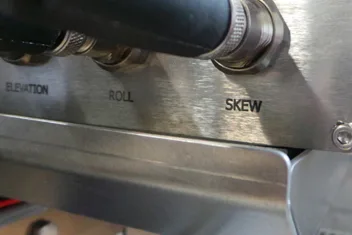
User instructions for connections (stainless steel)